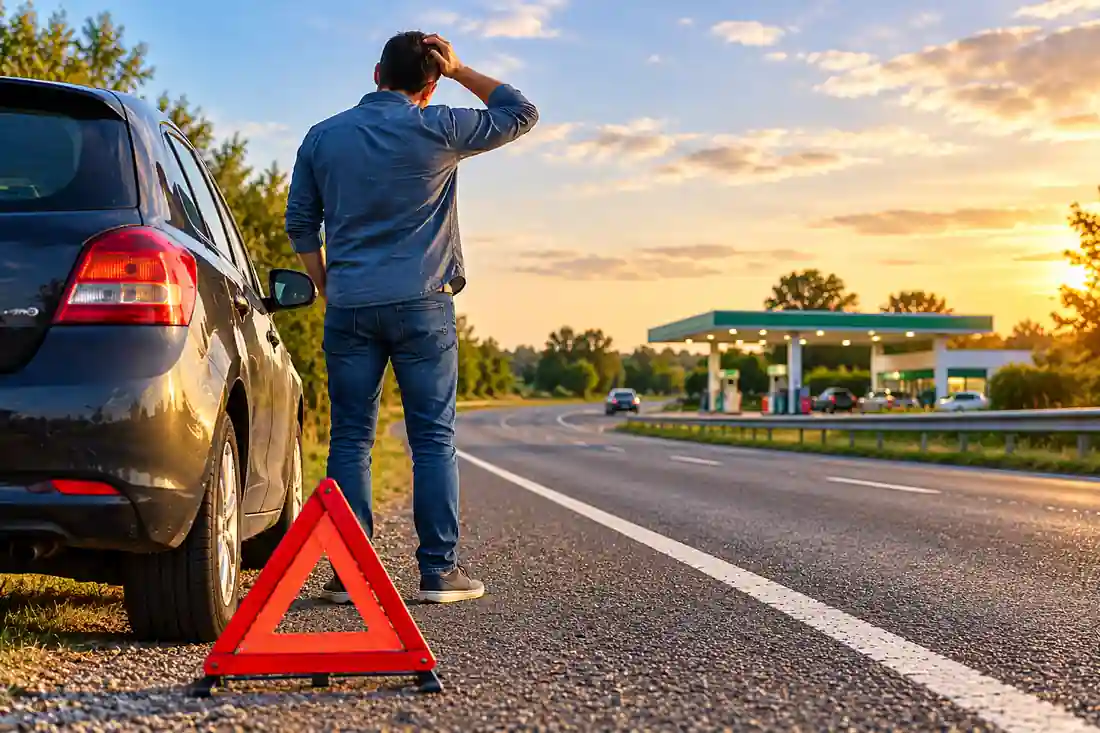
Running out of fuel can leave you stranded in an unsafe or inconvenient place. You might notice the engine losing power or find that your car stops completely. What you do next depends on where you are and whether you can safely move your vehicle.
Knowing how to respond can help you avoid unnecessary risks and get assistance when needed. Whether you are driving through Birmingham or travelling on a busy motorway, your safety should always come first.
This guide explains what to do if your car runs out of fuel, how to stay safe on a motorway, and when to contact a professional breakdown recovery service.
Also you can read :- How to Prepare Your Car for Winter Driving in Birmingham
1. Move to a Safe Place
If you notice the fuel warning light come on, look for a nearby petrol station before the tank runs empty. If the engine starts losing power, try to find a safe place to stop without making sudden movements.
On ordinary roads, pull into a car park, lay-by or another suitable area if possible. Avoid stopping near junctions, sharp bends or places where approaching drivers may struggle to see your vehicle.
Once you have stopped safely, switch on your hazard warning lights, apply the handbrake and turn off the engine.
Do not continue driving if your car is losing power or is no longer responding properly.
Also you can read this :- Broken Down on the M6? How to Tell a Recovery Driver Exactly Where You Are
2. What to Do If Your Car Runs Out of Fuel on a Motorway
Running out of fuel on a motorway requires extra caution because vehicles travel at high speeds. If your car starts losing power, focus on reaching a safe location rather than repeatedly trying to restart the engine.
Follow these important safety steps:
Move to a safe area: If possible, reach a motorway service area or emergency area without putting yourself or other road users at risk.
Switch on your hazard lights: This helps alert other drivers that your vehicle is experiencing a problem.
Exit carefully when safe: If your vehicle is in a safe stopping area and it is safe to leave, exit through the door away from traffic and move behind a safety barrier where possible.
Call for assistance: Provide your motorway number, direction of travel and nearest junction or location marker.
Never walk along the motorway to find petrol or cross traffic lanes. Do not place a warning triangle on a motorway.
If your car stops in a live traffic lane or you cannot reach a safe place, keep your seatbelt fastened, switch on your hazard lights and call 999 immediately.
Also you can read :- Breakdown Recovery Near Birmingham Airport: What Travellers Should Do
If you cannot reach a motorway service area safely, contact a professional breakdown recovery service rather than attempting to walk to a petrol station.
3. Can You Walk to a Petrol Station?
Walking to a nearby petrol station may be an option if your vehicle is parked safely and there is a suitable pedestrian route.
However, never leave your vehicle in a dangerous position or walk along roads where pedestrians are prohibited.
You will also need an approved fuel container. Never use ordinary bottles or unsuitable containers to carry petrol or diesel. If you do not have a suitable container, ask the petrol station about approved options.
If the petrol station is too far away or walking would put you at risk, contacting a roadside assistance provider may be a safer option.
4. What If Your Car Does Not Start After Refuelling?
Adding fuel does not always mean your engine will start immediately.
If your car ran out of petrol and won't start, first check that you have added the correct fuel and enough for the vehicle to operate.
Some vehicles may need a short time for fuel to reach the engine. Diesel vehicles, in particular, may require a specific priming procedure if the tank has run completely dry.
Also you can read this :- How Much Does a Tow Truck Cost in Birmingham
Check your vehicle handbook before attempting to restart the engine.
Avoid repeatedly turning the engine over, as this can drain the battery and place unnecessary strain on the starter motor.
If your vehicle still refuses to start, there could be another problem, such as a flat battery or an issue with the fuel system.
In this situation, contacting a professional breakdown recovery team is usually the best option.
5. How to Get Help When You Run Out of Fuel
Running out of fuel can be particularly stressful when you are travelling through an unfamiliar area or are stranded far from a petrol station.
If you cannot refuel safely, contact your breakdown assistance provider or a local vehicle recovery company.
Before arranging assistance, check whether your breakdown cover includes fuel-related callouts. Some providers may charge separately for the fuel supplied.
Depending on the provider and your location, assistance may include delivering fuel to your vehicle or arranging recovery to a nearby petrol station or garage.
If your vehicle does not restart after refuelling, professional recovery may be necessary.
When contacting a breakdown service, explain your location, vehicle details, and fuel type. Also mention whether you have already added fuel or attempted to restart the engine.
This information can help the recovery team understand your situation and arrange suitable assistance.
6. What Information Should You Provide to the Recovery Team?
Providing accurate information can help the recovery team locate your vehicle and understand what assistance you need.
Try to share the following details:
➤ Your current location or nearest landmark.
➤ The road name and direction of travel.
➤ Your vehicle's make, model and registration number.
➤ Whether your vehicle is parked safely.
➤ Whether your car uses petrol or diesel.
➤ Whether you have already added fuel.
➤ Whether you have attempted to restart the engine.
Never put yourself at risk to obtain these details. If you are stranded on a motorway, use nearby road signs or location markers only when you can identify them safely.
7. How Can You Avoid Running Out of Fuel Again?
Running out of fuel is often preventable with a few simple driving habits.
Here are some practical tips:
Refuel early: Avoid waiting until your fuel tank is almost empty.
Check before long journeys: Make sure you have enough fuel before setting off.
Plan fuel stops: Identify petrol stations when travelling through unfamiliar areas.
Consider driving conditions: Heavy traffic, driving style and weather can affect fuel consumption.
Never ignore the warning light: Do not assume you will always reach the next petrol station.
Remember that the estimated driving range shown on your dashboard is not guaranteed. Planning a fuel stop in advance can help you avoid an unexpected breakdown.
Conclusion
Running out of fuel can interrupt your journey and leave you in a difficult situation, especially on a busy road or motorway.
Your first priority should always be safety. Move away from traffic when possible, switch on your hazard lights and avoid walking along dangerous roads.
If you cannot refuel safely or your vehicle refuses to restart, professional assistance may be necessary.
Need help after running out of fuel in Birmingham?
Contact Easy Road Recovery for roadside assistance or vehicle recovery in Birmingham and the surrounding West Midlands. Explain your situation so the team can advise you on the assistance available.