Many motorists are confused when they hear terms such as police impound, police storage pound, vehicle recovery, or references to powers under Section 165A of the Road Traffic Act 1988. While these terms are often used interchangeably, understanding the process can help drivers know what to expect if their vehicle is seized.
What Is a Police Impound?
A police impound refers to the process where a vehicle is lawfully seized and removed from the road by the police or an authorised recovery operator. The vehicle is then taken to a secure storage facility (often referred to as a police storage pound) until the registered keeper can prove they are entitled to reclaim it.
Vehicles may be impounded for several reasons, including:
→ Driving without valid insurance
→ Driving without a valid driving licence
→ Dangerous or anti-social driving
→ Abandoned vehicles
→ Vehicles involved in criminal investigations
→Vehicles causing an obstruction or posing a danger
What Is a Police Storage Pound?
A police storage pound is a secure facility where seized or recovered vehicles are held.
In simple terms:
→ Police Impound = The legal process of seizure and removal
→ Police Storage Pound = The location where the vehicle is stored
Once recovered, vehicles are transported by authorised recovery operators to these secure facilities, where they remain until released or disposed of under legal procedures.
Police Vehicle Seizure Powers (Section 165A Road Traffic Act 1988)
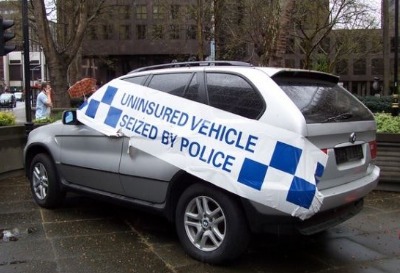
Under powers such as Section 165A of the Road Traffic Act 1988, police officers can seize vehicles being driven without valid motor insurance.
In practice, if a driver cannot provide satisfactory evidence of insurance at the roadside, officers may arrange for the vehicle to be recovered and stored in a police pound.
Driving without a valid licence may also result in seizure under related enforcement powers, depending on the circumstances.
These powers were introduced to reduce uninsured driving and improve road safety across the UK.
What Happens When a Vehicle Is Seized?
The vehicle seizure and recovery process typically follows these steps:
1. Vehicle Stop
Police stop the vehicle and carry out checks using national insurance and licensing databases.
2. Issue Identified
If valid insurance cannot be verified, officers may decide to seize the vehicle and issue a seizure notice.
3. Recovery Arranged
An authorised recovery operator is contacted to collect the vehicle.
4. Transport to Storage Pound
The vehicle is safely transported to an approved police storage facility.
5. Storage Charges Apply
Storage fees usually begin once the vehicle arrives at the pound.
6. Vehicle Release
To reclaim the vehicle, the registered keeper typically must provide:
→ Proof of ownership
→ A valid driving licence
→ Valid motor insurance
→ Payment of recovery and storage fees
Once verified and all charges are paid, the vehicle can be released.
How Long Do You Have to Collect an Impounded Vehicle?
Time limits vary depending on the police force and the reason for seizure.
In most cases involving uninsured driving seizures, the registered keeper is given a limited period to claim the vehicle. If it is not collected within the required timeframe, it may be disposed of in accordance with legal procedures.
It is important to follow the instructions on the seizure notice carefully, as deadlines can vary.
How Much Does It Cost to Release a Seized Vehicle?
Costs vary depending on location, vehicle type, and length of storage. Common charges include:
→ Vehicle recovery fees
→ Daily storage charges
→ Statutory release fees
→ Administrative costs (where applicable)
Fees can change, so it is advisable to contact the relevant police storage pound directly for up-to-date pricing before attending.
What Does Vehicle Recovery Involve?
Authorised recovery operators are responsible for safely transporting seized vehicles.
Their duties typically include:
→ Safe roadside recovery
→ Secure loading and unloading
→ Transport to approved storage facilities
→ Recording vehicle condition
→ Following police contract procedures
This ensures vehicles are handled safely and in compliance with legal requirements.
Can a Vehicle Be Recovered Without Being Impounded?
Yes. Not all police-involved recoveries result in impoundment.
Vehicles may also be recovered in situations such as:
Road traffic collisions
→ Mechanical breakdowns
→ Road obstructions
→ Abandoned vehicle removal
→ Evidence preservation requirements
In these cases, the vehicle may be taken to a garage, repair facility, or other secure location, depending on instructions from the authorities.
Vehicle Recovery Services in Birmingham
If you require assistance with vehicle recovery in Birmingham, including situations involving police seizure or roadside incidents, professional recovery services can help ensure safe and compliant transport.
Services typically include:
→ 24/7 vehicle recovery
→ Breakdown assistance
→ Accident recovery
→ Long-distance transport
→ Roadside support
→ Vehicle storage
→ Car and van recovery
For urgent assistance, contact a local recovery provider operating in your area for fast and professional support.